

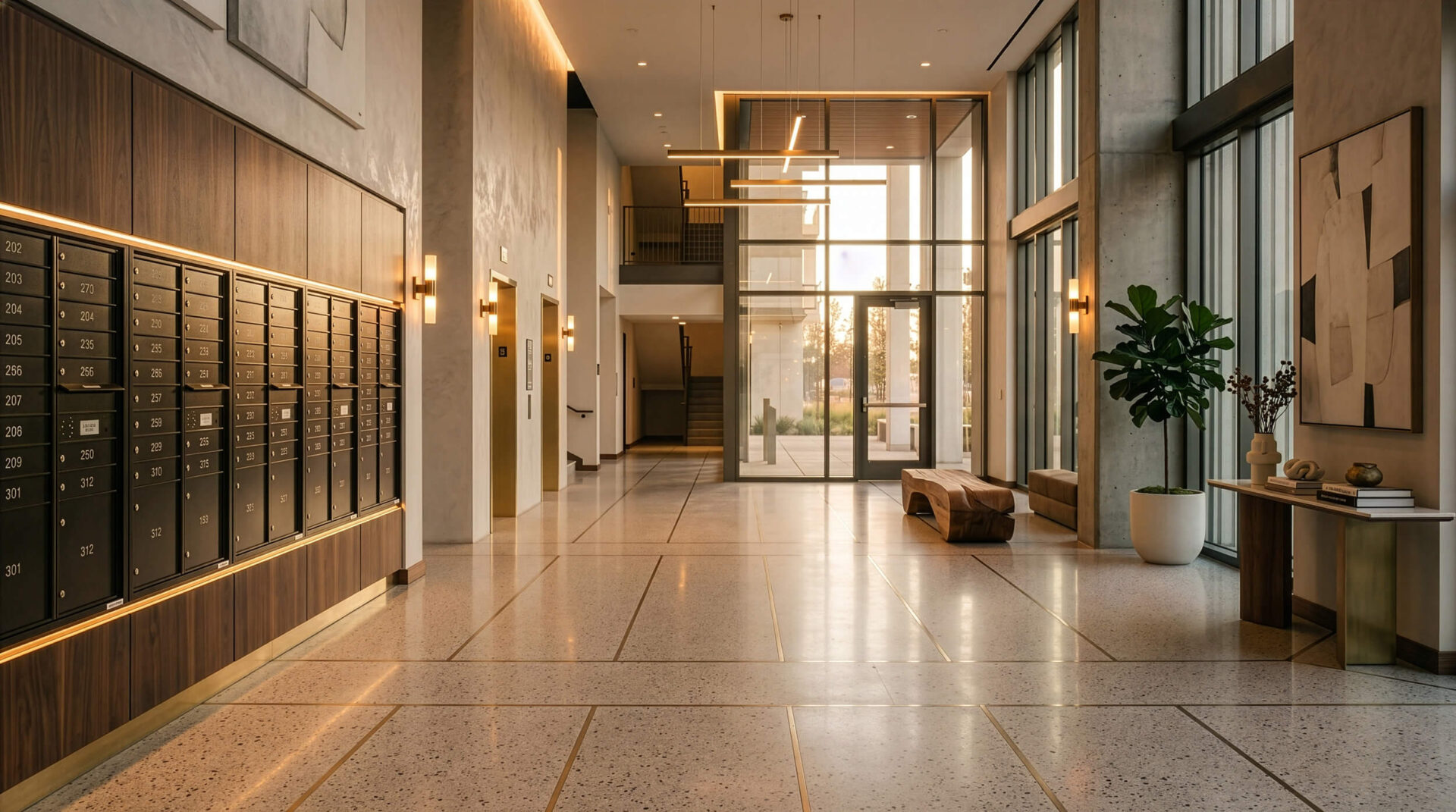
The building comes first.
The operating model stays consistent. The reporting adapts to the asset.
Asset-first management.
Most building management is structured around the contract. The scope defines the work. The budget defines the standard.
Held starts from the building itself. How defects are managed, how contractors are selected, how reporting is structured — each decision is measured against the condition of the asset, not the terms of the agreement.
That principle stays consistent regardless of whether the building is a strata scheme or an institutional asset.
Before, during, and ongoing.
Every building has a history. Understanding it is the first step in managing it properly.
When Held is appointed, we establish a clear operational baseline — reviewing building records, maintenance history, contractor relationships, compliance obligations and unresolved issues. For new developments, this begins before occupation. For existing buildings, it begins through a structured transition process.
The objective is the same in both cases: understand the building before making decisions about it.
Buildings perform better when knowledge stays with them.
Maintenance history, contractor performance, compliance records and operational decisions are retained and built upon over time. Rather than reacting to issues in isolation, Held uses this growing operational record to support maintenance planning, capital works, budgeting and long-term asset performance.
Before occupation
Pre-settlement is more than an inspection. It is the point where purchaser expectations, outstanding defects, builder responsibilities and the future operation of the building begin to intersect.
Held coordinates purchaser communications, inspection bookings, defect documentation and follow-up with the developer and builder. Each issue is recorded clearly, tracked through rectification and carried forward where ongoing attention is required.
When Held continues into building management, that knowledge is not lost at handover. The onsite team begins with a clear understanding of the building, its unresolved issues and the commitments made during settlement.
Purchaser communications, inspection scheduling and agreed reporting protocols.
Structured inspections, photographic records and clear defect documentation.
Builder coordination, purchaser updates, follow-up inspections and verified rectification.
Key handover, building information and a controlled transition into occupation.
Identify
Systematic inspections, resident reports, operational review.
Log & classify
Photographs, severity, warranty status, audit trail.
Assign & track
Builder notification, SLA tracking, escalation management.
Verify rectification
Physical inspection, compliance review, verified closure.
Record & report
Operational record retained across the life of the asset.
Managed in advance, not in response.
Fire safety, essential services, WHS, environmental requirements, and building-specific legislation all require ongoing oversight, documentation, and timely action.
Obligations are tracked centrally across every building under management. Compliance status is integrated into standard operational reporting. When legislation changes, the impact on each building is assessed and actioned before compliance issues emerge.
The same number. Any hour.
Residents call the same number after hours as during the day. Calls are answered by a dedicated support team briefed on the building, with issues triaged and escalated directly — whether to the building manager, a director, or emergency services. No voicemail, no ticket queue, no message left for the morning.
Every after-hours incident is logged, actioned, and recorded within the building’s operational reporting.